Caltech Undergraduate Research Journal
Featured Articles

Coronagraph and Wavefront Control for Direct Imaging and Characterization of Exoplanets
Luke Lamitina
Since the first detection of a planet beyond our solar system [1], exoplanetary study has become an emerging field of research due to its contribution towards the knowledge of our own planet as well as its significance towards the knowledge of whether life on other worlds is possible…
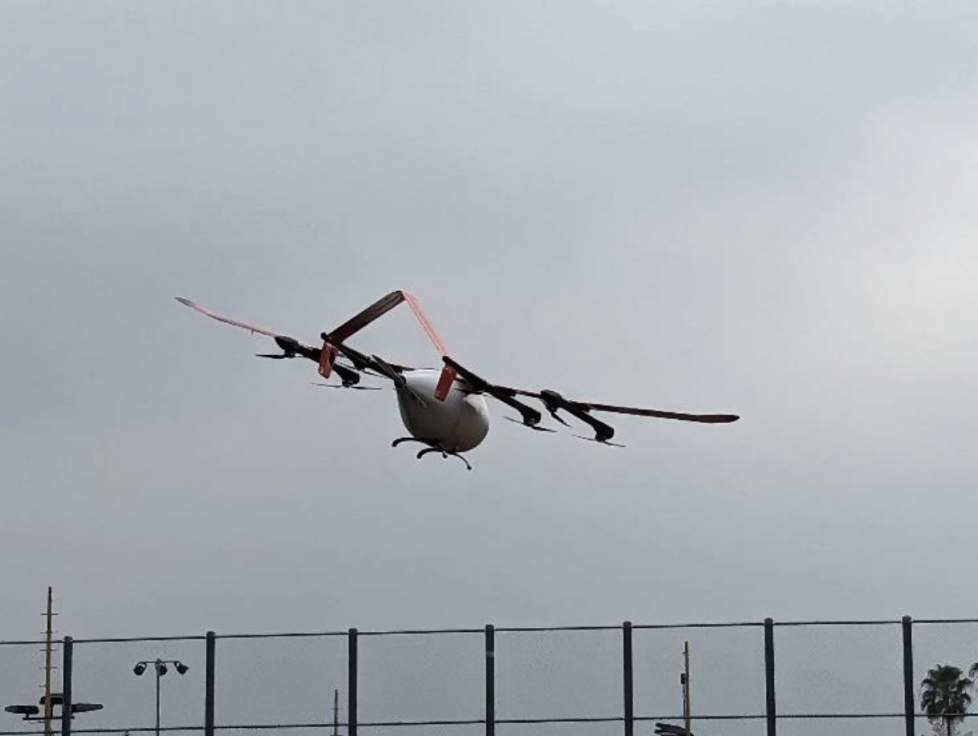
Autonomous Flying Ambulance: Hardware Integration and Testing
Catherine Zheng
This project’s overarching goal is to build a scaled-down version of an Autonomous Flying Ambulance (AFA), an emergency vehicle designed to carry patients and medics to nearby healthcare facilities. In the current 4th iteration of the AFA, researchers are developing a new fault-control algorithm that stabilizes the aircraft when one or multiple motors fail…

Interview with Professor Jane Bae
My research focuses on wall-bounded turbulence, which refers to the chaotic and disorganized movement of fluids such as air, water, or oil when influenced by the presence of a solid surface. I employ computational tools to simulate these turbulent flows to better understand their behavior and how to mitigate or enhance them as needed…

Interview with Professor Franca Hoffmann
My research has evolved since I arrived at Caltech. Before coming to Caltech, my Ph.D. was in PDE theory and analysis, focusing particularly on long-time asymptotics. This involves predicting the patterns and behaviors observed in various systems, such as fluids, population modeling, animal behavior, bacterial dynamics, and gas particle interactions…
 Caltech Undergraduate Research Journal